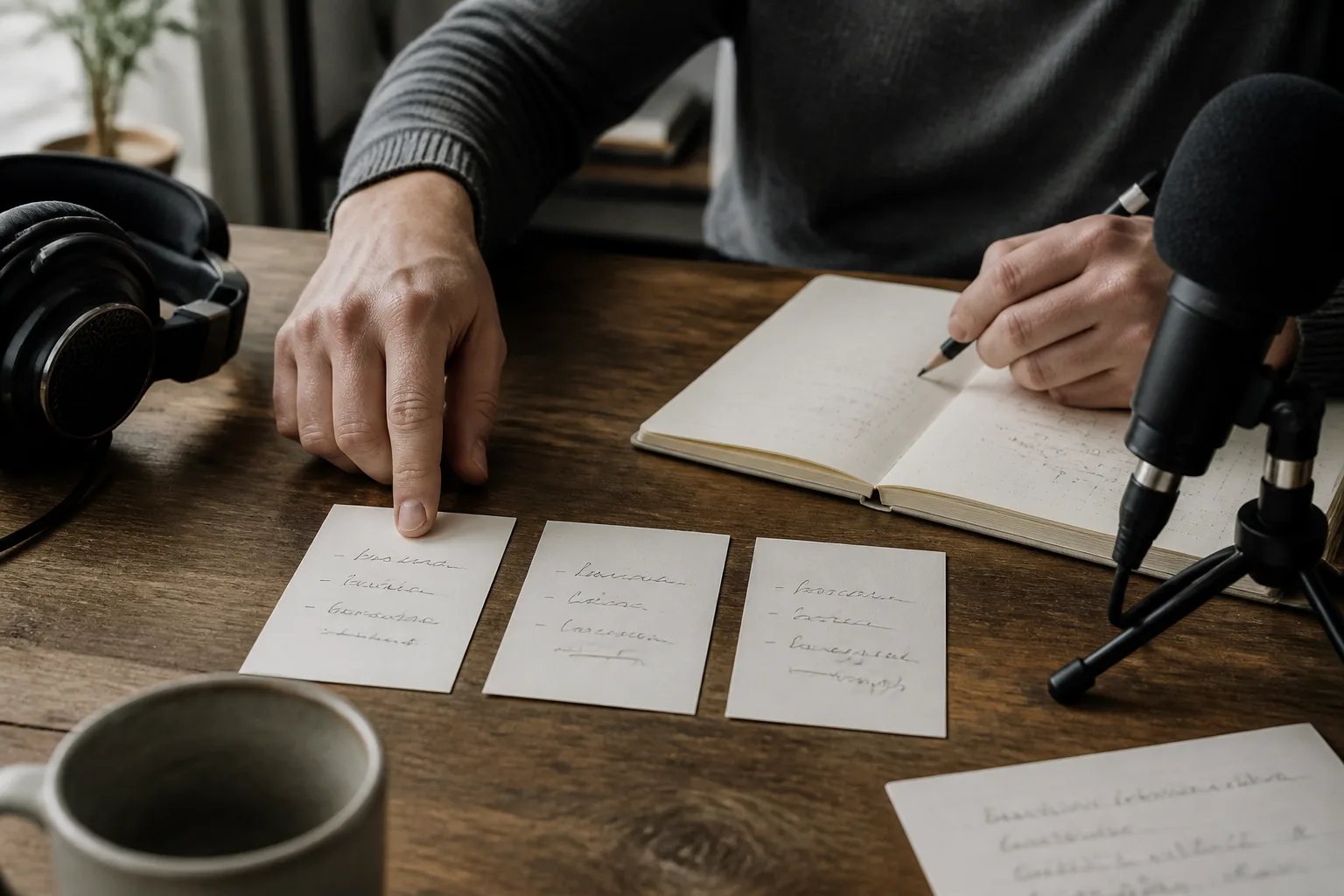
1. Build a risk list before generating the full script
Scan the script for personal names, place names, brands, model numbers, abbreviations, currencies, dates, measurements, and words from another language. Mark terms that could be read in more than one way.
Do not rely on a single isolated word. A pronunciation that sounds right alone can shift when it appears after a number, at the end of a sentence, or next to a brand name.
2. Put each term into a natural sentence
Create a short test sentence that matches the real use. For a price, include the currency. For a product name, include the surrounding sentence. For an acronym, decide whether the audience expects letters, a word, or an expanded phrase.
Keep the rest of the test stable so a reviewer can compare changes. Store the original text and any pronunciation-friendly variant separately, because the on-screen spelling may need to remain exact.
The Daro X2 ships on October 12 for forty-nine dollars.Use the real project term and verify the final wording with the owner of the name.
3. Review with the right listener
Ask a person who knows the language and the subject to listen without seeing the script first. Then show the written term and ask whether the intended name, quantity, and meaning came through.
If the term is legally protected or customer-facing, use an official pronunciation guide or request confirmation from the owner. Do not turn a guessed spelling into a public claim about how a person or company says its name.
4. Record the decision for the next edit
- Exact display spelling and the spoken test spelling.
- Voice, speed, punctuation, and any pause that affected the result.
- The reviewer and date for high-stakes names or claims.
- A short approved audio reference, kept with the project rather than in a random chat.
- A recheck whenever the voice model, script context, or number changes.